How to create a footwear incentive program
Footwear is bought in pairs, stocked in size runs and sold by a salesman who brings out the box. A store that has the style but not the customer's size loses the sale. A trade program for footwear has to reward the right size depth as much as the number of pairs, and it has to reach the salesman who decides which box to open.
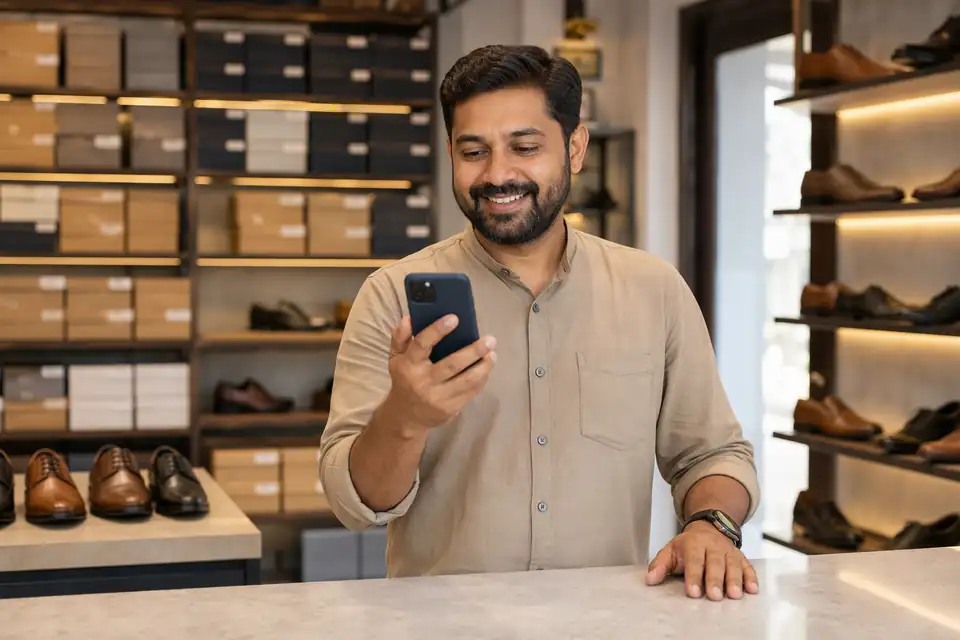
To create a footwear incentive program, reward wholesalers and distributors on season bookings counted in pairs, reward multi-brand outlets for both purchases and complete size runs in core articles, reward retail salesmen for each verified pair sold through a QR code on the box, and net returns of unsold sizes off before payout. Build the calendar around the school, monsoon, wedding and festive seasons in each region.
What makes footwear schemes different
- Pairs and size sets. Footwear is shipped in cartons of assorted sizes and sold one pair at a time. Schemes counted in value alone hide whether the outlet has the sizes that sell.
- Several short seasons. School reopening, the monsoon range, the wedding season, winter closed footwear and festivals each drive different articles at different times.
- The salesman decides the try-on. In a multi-brand store, the customer rarely picks the box. The salesman brings out what he thinks will sell, or what pays him.
- Returns of edge sizes. Unsold sizes at either end of the run, and seasonal articles left after the season, come back. Payouts before returns overpay.
- Copies are common. Popular designs are copied quickly. A QR code on the box lets the store and the customer verify the pair is genuine.
Seven steps to set up the program
Decide the tiers and articles
Choose the tiers to cover first (usually wholesalers and MBOs) and the articles each scheme applies to. Separate fast-moving basics such as slippers and sandals from season articles such as school shoes or monsoon footwear.
Build a season calendar by region
Mark school, monsoon, wedding, winter and festive windows for each region. Booking schemes sit before each window, sell-in schemes inside it.
Count in pairs, with size conditions
Set slabs on pairs, not only value, and add a size-run condition: the outlet must carry the core sizes of each core article to qualify for the higher rate.
Choose proof of sale per tier
ERP invoices for wholesalers, wholesaler invoice or bill photo with OCR for retailers, and a scan of the QR code on each box for salesmen.
Write the returns rule
Returns and credit notes in the period reduce qualifying pairs. For booking schemes, hold part of the reward until the return window closes.
Test on last season
Run each draft on last season's invoices and returns. Check how many outlets would reach each slab and how many met the size condition.
Launch with visibility
Publish to every eligible outlet on WhatsApp or the app, in its language, with pairs bought, size-run status and next target visible from day one.
- 1Season bookingWholesaler and large MBO orders in pairs
- 2Size-run checkCore sizes of core articles on the shelf
- 3Sell-inRetailer purchases by invoice or bill photo
- 4Salesman scanQR on the box scanned at sale
- 5Returns nettedUnsold sizes reduce qualifying pairs
- 6PayoutCredit note, UPI or rewards after approval
A sample season calendar
Timing is illustrative and varies by region; build one calendar per region.
| Season | Typical timing (illustrative) | Articles | Scheme kind |
|---|---|---|---|
| School | Booking in February to March, sell-in April to June | School shoes, sports shoes, sandals | Booking slab in pairs with size-run condition |
| Monsoon | Booking in April, sell-in June to August | PVC and EVA footwear, sandals | Short-window scheme, milestone blocks |
| Wedding and festive | Varies by region | Formal, ethnic and women's footwear | Festive spurt, growth over last year |
| Winter | Booking in August to September | Closed shoes, boots | Booking slab, range condition |
| All year | Monthly | Slippers, daily-wear sandals | Monthly pair slabs, cash discount |
Worked example: a school-season booking with a size condition
An illustrative scheme for MBOs on a school shoe range. The core articles are four styles; the core sizes are the middle eight of the run.
- Booking slab: 300 to 599 pairs earn ₹12 a pair; 600 pairs or more earn ₹18 a pair.
- Size condition: for the higher rate, the booking must include every core size in at least three of the four core styles.
- Returns: returned pairs in the season reduce the count; a third of the reward is held until the return window closes.
An outlet booking 640 pairs with complete core sizes in three styles earns ₹11,520. The same 640 pairs bunched in the middle sizes earn ₹12 a pair, ₹7,680. The difference pays for a shelf where the parent finds the child's size. The quantity purchase scheme guide covers pair and quantity slabs in more detail.
Tax note
Rewards to retailers and wholesalers may attract TDS under section 194R above the annual threshold, and salesman rewards may be treated differently depending on how they are paid. Confirm the treatment with your tax advisor before launch.
What Unotag does for footwear brands
Unotag's scheme engine runs booking, pair slab, short-window, milestone, growth and franchise schemes on your ERP invoices, with returns netted, backdating and what-if cost projection on past purchases. Retailers prove purchases by wholesaler invoice or bill photo with OCR. Per-unit QR codes on each box let salesmen claim verified sales and let customers check the pair is genuine, with first-scan binding and duplicate blocking. See the footwear page and the scheme calculation product.
Key takeaways
- Count footwear schemes in pairs and add a size-run condition for core articles.
- Build one season calendar per region: school, monsoon, wedding, winter and festive.
- Use a QR code on each box so salesmen earn on verified sales and customers can verify genuine pairs.
- Net returns of unsold sizes before payout and hold part of booking rewards.
- Test every scheme on last season's invoices and returns before publishing it.
Frequently asked questions
How do you design a footwear dealer scheme?
Set slabs in pairs for a defined list of articles, add a size-run condition for the higher rate, net returns off the qualifying count, and time the scheme to the season the articles sell in.
What is a size-run condition?
A rule that an outlet must stock every core size of a core article to qualify for a higher scheme rate, so customers find their size and sales are not lost.
How do you reward footwear salesmen?
Through a QR code on each box that the salesman scans at sale. Each code counts once, and the salesman earns a small reward per verified pair.
How are returns handled in footwear schemes?
Returned pairs in the scheme period reduce the qualifying count, and part of booking rewards can be held until the return window closes.
When should school-season footwear schemes be announced?
Before the booking window, typically well ahead of school reopening in each region, so outlets can book complete size runs.
Can footwear customers verify a genuine product?
Yes. Scanning the QR code on the box confirms the pair is genuine and flags codes already used.