Distributor Rewards Platform

A distributor rewards platform built for secondary sales, not just primary billing.

A distributor rewards program pays your distributors for outcomes you can verify: growth over a base, secondary sales proven by retailer scans and synced invoices, new outlets billed and collections on time. Unotag computes the slabs, publishes a monthly statement to every distributor, settles by UPI, credit note, gift card or catalogue, and aggregates Section 194R values for finance.

1% to 3%
Typical payout on secondary value
48 hrs
Sandbox with your data
10
Indian languages on WhatsApp
90 days
Pilot before rollout

Payout ranges are what we observe across programs Unotag runs, not industry statistics.

Why distributors are different

Distributors need a different program from dealers and retailers.

A retailer loyalty program works on thousands of small, frequent decisions. A distributor loyalty program works on a few dozen large accounts that decide where your brand goes in a territory. Copying the retailer slab across does not work. Three things change.

Few in number, high in leverage

A brand rarely has more than a few hundred distributors. Each one controls credit, delivery and shelf presence for hundreds of retailers, so every slab must be designed per account, not per segment.

Credit and coverage are their job

Distributors extend credit to retailers, run vans and are expected to open new outlets. A program that only pays on volume ignores the two things the brand actually needs from them.

Secondary sales is the real KPI

Primary billing can be loaded at quarter end and returned later. What the distributor sells to retailers, verified by scans and invoices, is the number worth paying for. See how this fits with dealer rewards and retailer loyalty in one stack.

Distributor warehouse with stacked cartons ready for secondary dispatch
Capabilities

What a distributor rewards platform needs to do

Distributor rewards software is less about points and more about data, statements and clean settlement. These eight capabilities are the ones that decide whether finance signs off.

Targets and growth-on-base slabs

Quarterly or monthly targets per distributor, with growth slabs computed over a rolling base so challengers and large accounts are both stretched.

Secondary-sales proof

Retailer scans of serialised QR codes and synced DMS or Tally invoices establish what each distributor actually sold, outlet by outlet.

Range and coverage bonuses

Pay for new outlets billed, outlets billed three months running and SKU categories placed, with GST and phone dedupe to stop ghost outlets.

Ledger and monthly statements

Every distributor sees a running ledger: base, achievement, slab reached, projected payout and a signed monthly statement finance can audit.

Payouts the distributor prefers

UPI, credit notes, a 10,000+ item catalogue with doorstep delivery, or co-branded reloadable gift debit cards for the annual tier.

Section 194R aggregation

Benefit values aggregated per PAN across cash, kind and cards, threshold alerts and export-ready schedules for your tax advisor.

WhatsApp-first communication

Enrolment, slab progress, statement delivery and payout confirmation on WhatsApp in 10 Indian languages, with a web portal for the office team.

Analytics and territory views

Region, ASM and distributor views of secondary sales, coverage, payout ratio and slab distribution, exportable to your existing BI stack.

Program structures

Six ways to structure a distributor loyalty program

Most brands combine two or three of these. Payout ranges are what we observe across programs Unotag runs; your margin structure sets the right number for you.

StructureKPITypical payout rangeGaming risk
Absolute volume slabPrimary billing value per quarter1% to 3% of billed valueHigh: quarter-end loading, returns after payout
Growth on baseGrowth over the same quarter last year2% to 5% of incremental valueMedium: base manipulation in year one; use a three-quarter base
Secondary sales targetRetailer-scanned or DMS-confirmed secondary value1.5% to 3% of verified secondary valueLow when scan-verified; medium when self-declared
Range and coverage bonusNew outlets billed, categories per outlet₹500 to ₹2,000 per new active outletMedium: ghost outlets; needs GST or phone dedupe and first-scan proof
Collection-linked incentiveDays outstanding, on-time payment0.5% to 1.5% of collected valueLow
Annual club or tierFull-year secondary value plus coverageTrip, gold or product worth ₹50,000 to ₹5 lakhLow: annual and hard to game in one quarter

Try combinations on your own numbers with the slab designer and the loyalty program cost calculator.

How it works

From data mapping to payout in five steps

1

Map the data

Primary billing from ERP, distributor masters, retailer masters and the DMS or invoice feed. Gaps are listed and resolved before design.

2

Design the structures

Pick two or three structures from the table above, set bases and slabs per region, and run a what-if on last year's data.

3

Enrol on WhatsApp

Distributors and their retailers join in their own language. KYC, PAN and bank or UPI details are collected once.

4

Track and show progress

Scans and invoices post daily. Each distributor sees achievement, gap to next slab and projected payout.

5

Settle and report

Monthly statements are approved by finance, payouts go out by UPI, credit note or card, and 194R schedules are exported.

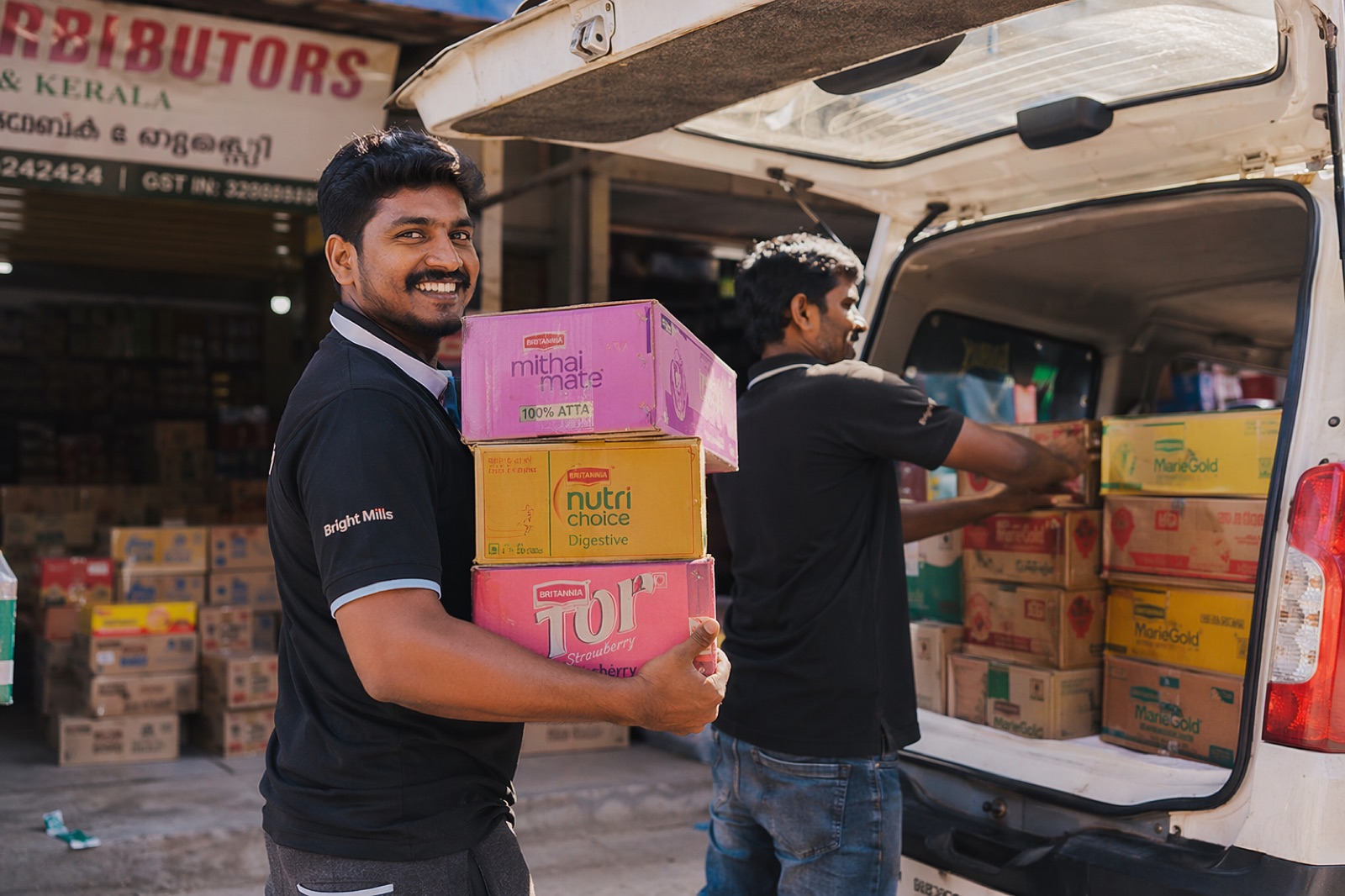
Distributor van being loaded for retailer deliveries
Worked example

A 120-distributor pipes brand, quarter by quarter

All figures below are illustrative. They show how the structures combine and what growth the program has to deliver to pay for itself.

ItemIllustrative figure
Network120 distributors, about 6,000 retailers (sub-dealers)
Base secondary sales₹72 crore per quarter (average ₹60 lakh per distributor)
Growth on base at 3% of incremental70 distributors grow by an average ₹8 lakh: ₹5.6 crore incremental, payout ₹16.8 lakh
Secondary target at 1.5% of verified value90 distributors qualify on an average ₹55 lakh verified: payout ₹74.25 lakh
Coverage bonus at ₹1,000 per new outlet600 new outlets billed and scan-verified: payout ₹6 lakh
Total rewardsAbout ₹97 lakh per quarter, or 1.35% of base secondary sales
Platform fee₹1.2 lakh per month, ₹3.6 lakh per quarter
Break-even growthAt a 22% contribution margin the program pays for itself at about 6.3% growth in secondary sales

What the example shows

Total cost, rewards plus platform, is about ₹1 crore per quarter against ₹72 crore of base secondary sales. The growth-on-base structure only pays on incremental value, so most of the outlay is self-funding. The brand also gains 600 verified new outlets and a per-distributor view of secondary sales it did not have before. Run your own version with the ROI calculator.

FAQ

Distributor rewards programs: frequently asked questions

What is a distributor rewards program?

A distributor rewards program is a structured incentive a brand pays its distributors for measurable outcomes beyond primary billing: growth over a base, verified secondary sales to retailers, new outlets billed, range sold and timely collections. Rewards are settled as credit notes, UPI, gift cards or catalogue items against a monthly statement.

How is a distributor loyalty program different from a dealer loyalty program?

Distributors are few, carry credit and coverage responsibility, and are measured on what their retailers sell, not on what they buy. A distributor loyalty program therefore rewards secondary sales, coverage and collections. A dealer loyalty program is closer to a volume slab on the dealer's own purchases and sell-out.

What software do we need to run distributor rewards?

You need a system that imports primary billing from your ERP, captures secondary sales from retailer scans or a DMS, computes slabs and bonuses, publishes a monthly statement to each distributor, pays out through UPI, credit notes or gift cards, and aggregates Section 194R values. Unotag runs all of this on one platform.

How do you prove secondary sales?

Two ways, usually combined. Retailers, that is sub-dealers, scan serialised QR codes on cartons or invoices at receipt, which ties each unit to a distributor and an outlet. Distributor DMS or Tally invoices are synced and matched against those scans. Payouts are computed on the verified value, not on self-declared numbers.

Is TDS applicable on distributor rewards?

Yes, in most cases. Section 194R of the Income-tax Act covers benefits or perquisites arising from business, including gifts, trips and gift cards, once the aggregate crosses the annual threshold. Credit notes may be treated differently. Unotag aggregates values per PAN and flags thresholds; confirm treatment with your tax advisor.

How long does it take to launch?

A sandbox mirroring your distributor list, SKUs and slab structure is ready in 48 hours. Programs across the network Unotag runs typically go live in 3 to 6 weeks, depending on how quickly ERP and DMS data mapping is signed off. Most brands start with a 90-day pilot in two or three regions.

What does a distributor rewards platform cost?

Unotag pricing is ₹30,000 to ₹3 lakh per month, set by monthly active members. A pure distributor program with 100 to 500 members sits at the lower end; enrolling retailers for scan-based secondary proof moves it up. Reward payouts and TDS are separate and funded by the brand.

Further reading

Run a 90-day distributor pilot.

Tell us your distributor count, SKUs and how secondary data reaches you today. We will mirror your program in a sandbox in 48 hours.

Further reading on distributor programs