How footwear brands win the shelf and the try-on
In a footwear store, two decisions matter: how much shelf and size depth the owner gives the brand, and which box the salesman brings out when a customer sits down. A retailer strategy for footwear has to win both, one outlet at a time, and keep them through the seasons.
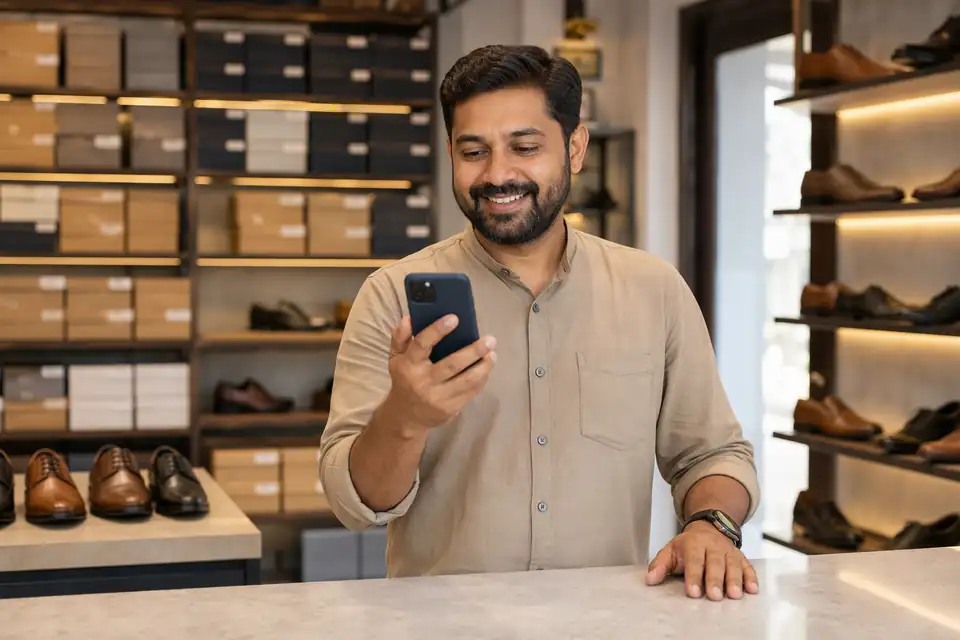
A strong footwear retailer strategy chooses outlets that match the brand's price band and articles, opens them with a size-run order of core articles, enrols the owner and his salesmen on WhatsApp at the first order, and activates them with a welcome scheme on the first proved bill and per-pair salesman rewards on box scans. It keeps them with simple slabs, season spurts and recognition, with progress visible every week.
Choosing the right outlets
- Price band fit. An outlet that sells mostly mass sandals will not move premium sports shoes, however good the scheme.
- Season fit. Outlets near schools for school shoes, rural and semi-urban markets for monsoon and daily wear, family stores for festive ranges.
- Distributor reach. Outlets on an existing distributor's route can be reordered quickly, which matters when sizes run out mid-season.
- Existing relationship. Outlets already buying one category from the brand are the easiest to extend.
Acquisition and activation in six steps
Open with a size-run order
Build the first order around a few core articles in every core size, sized to the outlet, rather than many articles in a few sizes. The first season's sell-through decides the second order.
Enrol owner and salesmen at the first order
Register the outlet and the owner's UPI ID on WhatsApp through the distributor's salesman or the brand's sales officer, and with the owner's agreement register his salesmen too.
Pay a welcome reward on the first proved bill
A new-retailer scheme pays on the first purchase proved by wholesaler invoice or bill photo with OCR, settled by UPI within days.
Start salesman rewards from day one
Each box scanned at sale earns the salesman a small reward instantly. The first reward on the first day is what turns scanning into a habit.
Help with display
A simple display standard for the brand's articles, checked by a photo, can earn a monthly reward. Visible stock sells; boxes in the back do not.
Show progress all season
Pairs bought, size-run status, the next slab and salesman leaderboards visible on WhatsApp in the outlet's language keep the brand in mind between visits.
- 1Choose outletPrice band, season and route fit
- 2Size-run orderCore articles in every core size
- 3Enrol on WhatsAppOwner, UPI and salesmen
- 4Welcome rewardOn the first proved bill
- 5Salesman scansPer-pair rewards from day one
- 6ReorderSize refills and next season booking
Schemes that keep footwear retailers engaged
| Scheme | How it works (illustrative) | What it does |
|---|---|---|
| Monthly pair slab | Above 150 pairs a month from the wholesaler earns ₹6 a pair; above 300, ₹9 a pair | Rewards consistent buying |
| Size-run reward | ₹1,000 a month for carrying all core sizes of four core articles | Keeps runs complete |
| Season spurt | Higher rate on school or monsoon articles for a short window before the season | Captures the peak |
| Salesman reward | ₹5 to ₹20 per verified pair, by price band | Gets the brand's box opened first |
| Display reward | Monthly amount for a display checked by photo | Puts stock where customers see it |
Keep live schemes per outlet to two or three. More than that and the owner stops tracking any of them. The retailer scheme examples post has more formats to choose from.
Retail salesmen are a separate audience
Footwear salesmen move between stores, and many work on a small fixed salary. A per-pair reward that arrives on their phone the moment they scan is meaningful to them. Run town-level leaderboards and monthly contests, recognise the top salesmen at a meet, and agree everything with the store owner first. The owner should see his salesmen's scans, which also tells him which articles and sizes are selling. Franchise stores can use the same salesman program inside a franchisee incentive program.
Copies at the counter
Popular footwear designs are copied quickly and sold at a lower price in the same markets. A QR code on each box lets the retailer show a customer that the pair is genuine, and the same scan that pays the salesman confirms it. For the outlet owner, verified genuine stock is a reason to give the brand shelf space over a cheaper copy. For the brand, verification failures by town show where copies are being sold.
Activation metrics
An outlet that took a first order but has no salesman scans usually means the owner did not agree to the salesman program or nobody showed the salesmen how. An outlet with scans but no size refill needs a reorder nudge before the gap costs sales.
What Unotag does for footwear retailers
Unotag lets outlets and salesmen join on WhatsApp or the app, or inside your own app through the SDK. Retailers prove purchases by wholesaler invoice or bill photo with OCR; salesmen scan per-unit QR codes on boxes with first-scan binding and earn instantly by UPI or points, with tiers, badges and leaderboards. Outlets can reorder from the catalogue on the app or WhatsApp. See the footwear page and the retailer incentive program.
Key takeaways
- Choose outlets by price band, season fit and distributor route, not by size alone.
- Open each outlet with core articles in every core size rather than many articles in few sizes.
- Enrol the owner and his salesmen on WhatsApp at the first order, with the owner's agreement.
- Pay salesmen per verified pair from day one, and reward size runs and display.
- Track salesman scans, size refills and next-season booking, not just first orders.
Frequently asked questions
How do footwear brands get into multi-brand outlets?
By choosing outlets that match the price band and season, opening with a size-run order of core articles, and activating with a welcome scheme, salesman rewards and visible progress.
Should footwear brands reward retail salesmen?
Yes, with the store owner's agreement. A small per-pair reward on a box scan at sale gets the brand's box opened first and records what sold.
How are retailer purchases proved in footwear?
Through the wholesaler's invoice or a photo of the retailer's purchase bill read by OCR.
What is a size-run reward?
A monthly reward for carrying every core size of a set of core articles, so customers find their size.
How many schemes should a footwear retailer have?
Two or three at most. More than that and the owner stops following any of them.
Do footwear retailers and salesmen need an app?
No. They can enrol, scan and see progress on WhatsApp. An app or the brand's own app is optional.